

Introduction: A Shift in Perspective
Throughout my career at the intersection of technology and leadership, I’ve witnessed the industry’s relentless pursuit of technical expertise. Skills like coding, data analytics, and advanced engineering degrees often dominate the conversation about what defines professional success. However, recently I’ve found myself questioning this narrative. Increasingly, I’m convinced that it’s the soft skills, emotional intelligence, negotiation, empathy, that truly differentiate outstanding professionals from merely capable ones. This shift in perspective isn’t a rejection of technical skills but a recognition of how critical human-centered abilities have become.
Why Soft Skills in Tech Are Rising in Importance
It might seem surprising to claim that soft skills could be critical in a tech-driven future, but research consistently backs this perspective. According to the World Economic Forum’s “Future of Jobs Report 2023,” emotional intelligence, creativity, and people management will be among the most critical skills for career growth in the coming years. The reasoning is clear: as technology becomes more integrated into every aspect of our lives, the ability to navigate human relationships and foster meaningful interactions becomes increasingly essential. Such is the rising importance of mastering soft skills.
Emotional Intelligence: Beyond Technical Prowess
My professional journey has repeatedly demonstrated to me that technical expertise alone isn’t sufficient for long-term success. Projects rarely fail solely because of technical complexity; they falter when communication breaks down, or team cohesion suffers. Emotional intelligence, our capacity to empathize, communicate effectively, and build relationships, is critical for navigating these challenges.
Psychologist Daniel Goleman, author of the groundbreaking book “Emotional Intelligence: Why It Can Matter More Than IQ,” emphasizes how emotional intelligence is often a better predictor of professional success than traditional measures like IQ. Goleman’s research highlights that emotionally intelligent leaders are more adept at managing stress, resolving conflicts, and inspiring their teams to achieve exceptional outcomes. This demonstrates the critical value of soft skills in leadership roles.
The Vital Role of Negotiation and Diplomacy
Another overlooked but crucial skill is negotiation—the ability to navigate complex, cross-functional situations with diplomacy. As technology roles increasingly demand cross-team collaboration, negotiation skills have become essential. Harvard Law School’s Program on Negotiation stresses that negotiation skills aren’t reserved just for executives. Instead, they’re indispensable for tech professionals regularly dealing with diverse stakeholders and complex project environments.
Personally, I’ve observed that those who thrive in tech aren’t always the best coders or the most technically knowledgeable individuals. Often, they are skilled integrators—those capable of effectively connecting technology solutions with business objectives and interpersonal dynamics. Their diplomatic skills help bridge gaps between differing departments, align competing interests, and create unified teams. To excel, soft skills in negotiation and diplomacy are paramount.
Empathy as a Competitive Advantage
Empathy, another critical yet frequently undervalued skill, has gained increasing recognition, especially in the era of remote and hybrid work. Effective leaders now realize the value of understanding and addressing the emotional and psychological needs of their teams. A recent Forbes article highlights that empathetic leaders significantly boost employee engagement, reduce turnover, and create environments where innovation thrives. It’s clear that soft skills, particularly empathy, offer a significant competitive advantage.
I have personally experienced how cultivating empathy within my teams creates trust, collaboration, and motivation. These intangible benefits often lead to measurable improvements in productivity, creativity, and organizational resilience.
Integrators: The Real Champions of Tech
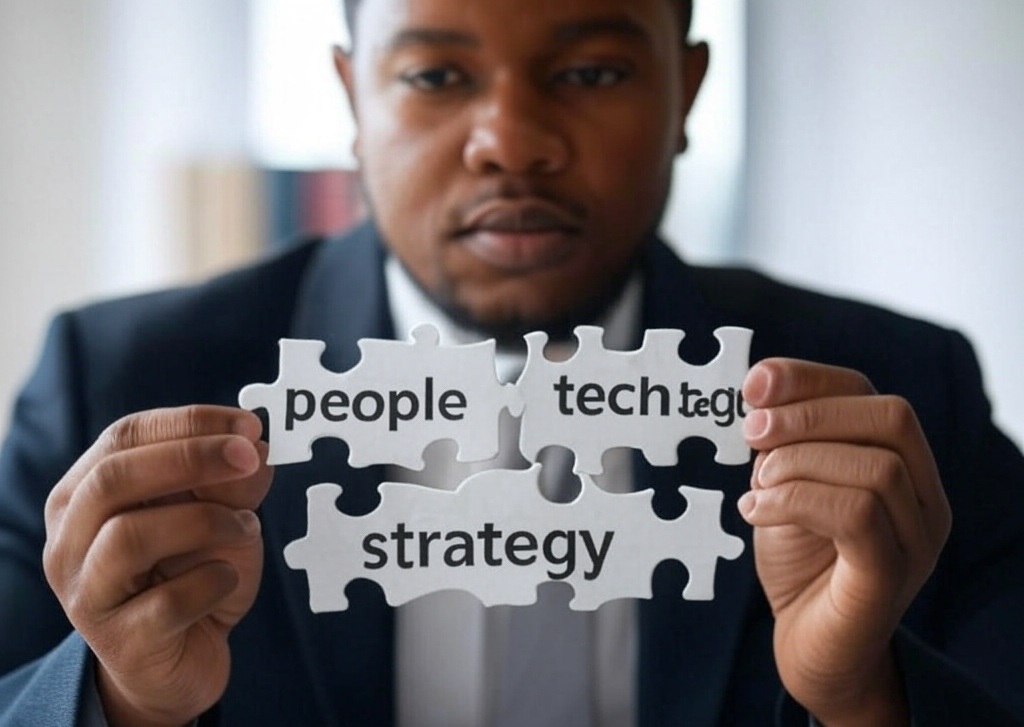
Throughout my career, I’ve noticed the most effective leaders aren’t necessarily those with the deepest technical backgrounds. Instead, they are what I call the “integrators”—individuals who excel at bridging the gap between people, technology, and strategy. Integrators possess a unique ability to navigate complex relationships, mediate conflicts, and create alignment across diverse teams and organizational structures. Their strength lies not in their mastery of coding languages but in their ability to fuse people and technology seamlessly into a cohesive strategy.
Embracing a New Definition of Skill
In closing, while technical skills remain essential, the future undoubtedly belongs to those who master the delicate balance between technology and humanity. Our distinctively human traits—emotional intelligence, empathy, effective negotiation, and diplomacy—are not just beneficial; they are indispensable in driving sustainable success in a technology-driven world.
As we move forward, it’s critical that both individuals and organizations begin to redefine what we consider “skilled.” Perhaps the ultimate measure of our professional competence shouldn’t just be what we know technically, but how effectively we integrate and leverage diverse human strengths to create thriving, innovative teams. Soft skills will be indispensable in this new paradigm.

Leave a Reply